News & InsightsFeaturedTrending
2026年4月20日
Surface Mount Downlight Design: Sleek, Efficient Lighting for Modern Spaces
Modern facilities demand lighting that works as hard as the spaces themselves. Surface mount downlight design delivers exactly that-clean aesthetics paired with serious energy savings and installation
Modern facilities demand lighting that works as hard as the spaces themselves. Surface mount downlight design delivers exactly that-clean aesthetics paired with serious energy savings and installation flexibility that recessed options simply can’t match.
At PacLights, we’ve seen firsthand how the right lighting transforms both the look and operating costs of commercial and industrial spaces. This guide breaks down why surface mount downlights are becoming the standard for facilities that refuse to compromise on efficiency or design.
What Surface Mount Downlights Actually Are
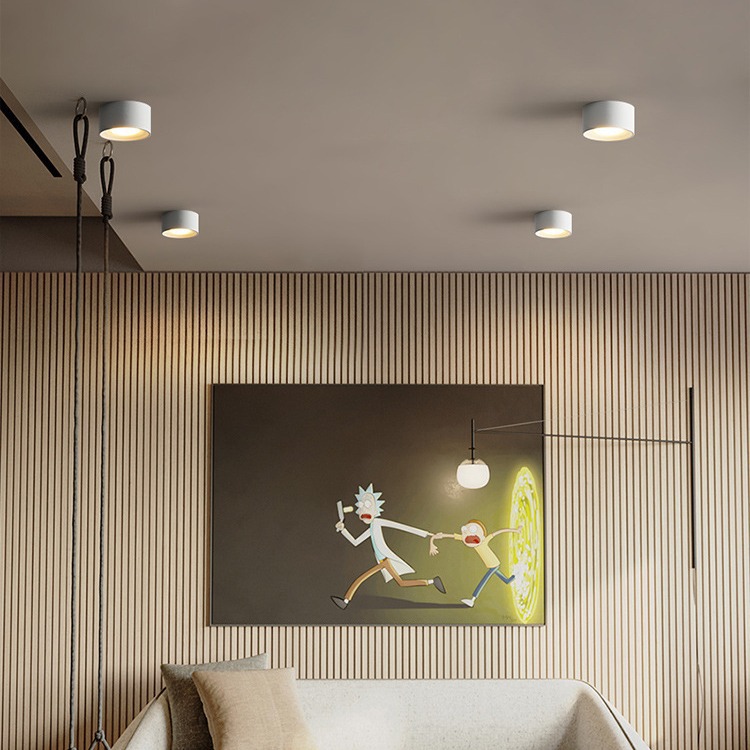
Surface mount downlights sit directly on your ceiling surface rather than recessing into it, delivering focused illumination through a compact fixture body. The core components are straightforward: an LED light source, a driver (the power supply), a heat sink to manage thermal buildup, and a lens or diffuser to shape and soften the light output. The fixture mounts to drywall, concrete, metal, or suspended ceilings using a base plate and fasteners, then connects to your electrical supply through standard wiring. Unlike recessed fixtures that require cutting into ceiling cavities and installing complex housing, surface mount designs arrive ready to install. A 10,000 square foot retrofit installation takes two to three days, compared to five to seven days for recessed systems, cutting labor costs by 30 to 40 percent. This speed matters because it reduces operational disruption and accelerates payback on your investment.
Why Surface Mount Outperforms Recessed Installation
Recessed lighting demands structural work that surface mount eliminates entirely. Installing a recessed fixture means cutting holes in your ceiling, routing wiring through cavities, and securing housings behind drywall or suspended tiles. This approach creates three major problems: first, it consumes time and money; second, it becomes impractical in older buildings with asbestos or complex ceiling structures; third, it leaves patched holes if you ever relocate fixtures.
Surface mount downlights skip these headaches. They mount directly to existing ceilings without modification, work on any surface material, and can be repositioned in hours rather than days. A facility with 100 fixtures can move or upgrade them without ceiling reconstruction. Installation costs run 30 to 40 percent lower than recessed options according to real-world retrofit data. The electrical work simplifies too-no running cables through ceiling voids, just standard connections at each fixture location.
Real-World Applications Across Industries
Warehouses, manufacturing floors, retail showrooms, office spaces, and parking structures rely on surface mount downlights because they deliver performance without renovation costs. Warehouse operations benefit most because these spaces rarely tolerate the downtime that recessed installation demands. A 50,000 square foot manufacturing facility can install 200 surface mount fixtures in three days and see immediate energy reductions of 15 to 25 percent compared to older fluorescent or halogen systems. Retail environments use them for precise task lighting above merchandise displays, where beam angles between 15 and 30 degrees highlight products accurately. Office buildings choose surface mount designs when ceiling height is limited or when facilities need lighting flexibility for hot-desking or space reconfigurations. Parking structures and canopies require weatherproof variants, and IP-rated surface mount fixtures handle moisture and salt spray without performance loss.
What Makes Surface Mount Technology Stand Out
The installation speed and cost advantage create a compelling case, but the real strength lies in flexibility. Surface mount fixtures adapt to spaces that recessed systems cannot serve-low ceilings, concrete structures, and facilities where ceiling modification triggers code reviews or structural concerns. The ability to reposition fixtures in hours (not days) means your lighting layout can evolve as your operations change. This adaptability translates directly into longer fixture life and lower total cost of ownership because you’re not locked into a permanent installation. When your facility layout shifts, your lighting shifts with it. This flexibility extends to control integration as well, enabling you to add motion sensors, daylight harvesting, or networked controls without rewiring the entire ceiling. The next section explores how this technology translates into measurable energy savings and operating cost reductions that justify the switch from traditional lighting systems.