News & InsightsFeaturedTrending
2026年4月20日
Reflections on Commercial Lighting Post-Light+Building 2026: Sustainability, Intelligence, and Human-Centric Design
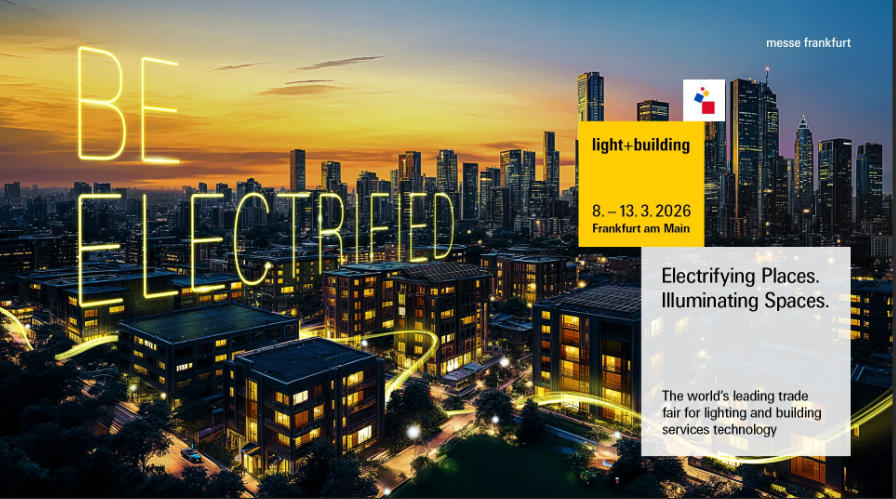
Light+Building 2026, the world's premier trade fair for lighting and building services technology held in Frankfurt from March 8th to 13th, has once again served as a powerful catalyst for industry in
Light+Building 2026, the world's premier trade fair for lighting and building services technology held in Frankfurt from March 8th to 13th, has once again served as a powerful catalyst for industry innovation. As the curtains close on this biennial event, it offers profound insights and clear directions for the future trajectory of commercial lighting. The exhibition, featuring around 2,000 exhibitors from 49 countries, centered on three overarching themes—Sustainable Transformation, Smart Connectivity, and Living Lightlight-building.messefrankfurt.com. These themes are not merely abstract concepts but are reshaping the very foundation of commercial lighting, driving a shift from purely functional illumination to a holistic integration of technology, environment, and human experience.
Sustainability: The Non-Negotiable Core of Commercial Lighting
Sustainability has evolved from an optional selling point to an indispensable imperative in commercial lighting. At Light+Building 2026, the industry's focus on green development has reached unprecedented heights, permeating every aspect from product design to system solutions.First and foremost is the relentless pursuit of energy efficiency. Exhibitors showcased cutting-edge LED chips with luminous efficacy exceeding 200lm/W, a remarkable 30% improvement over conventional products. This breakthrough significantly reduces energy consumption, directly addressing the dual pressures of rising energy costs and carbon emission reduction targets. High-efficiency linear lighting and track lighting systems have become standard-bearers for commercial spaces such as offices, retail stores, and hotels, delivering superior brightness with far less power.Beyond energy efficiency, the concept of circularity has taken root. There is a growing emphasis on the entire product lifecycle—from the selection of eco-friendly materials to design for disassembly, reuse, and recycling. We've seen a surge in luminaires crafted from recycled metals, biodegradable bamboo composites, and other low-environmental-impact materials. Manufacturers are increasingly providing Environmental Product Declarations (EPD) to transparently communicate the environmental footprint of their offerings, responding to stringent global regulations like the EU's Carbon Border Adjustment Mechanism (CBAM). Commercial lighting is no longer just about saving energy during operation; it's about minimizing environmental impact from cradle to grave.Furthermore, the integration of renewable energy is accelerating. Off-grid lighting systems combining solar photovoltaic and energy storage technologies were prominently displayed. These solutions, which have seen a 27% cost reduction, are becoming increasingly viable for retrofitting public and commercial facilities. This represents a significant step towards creating truly self-sufficient, low-carbon commercial spaces.
Smart Connectivity: Lighting as the Nervous System of Intelligent Buildings
The second transformative trend is the deep integration of smart connectivity. Commercial lighting is rapidly evolving from isolated fixtures into an intelligent, networked ecosystem that forms a critical part of building automation.The era of simple App control is over. At Light+Building 2026, the focus was on context-aware, autonomous systems. Lighting solutions are now equipped with a sophisticated array of sensors—occupancy, daylight harvesting, and even environmental sensors—that work in tandem with AI-driven control algorithms. These systems can precisely adjust light levels and color temperature in real-time, responding dynamically to the presence of people, the intensity of natural light, and specific usage scenarios. For example, in an office, the system can brighten with cool white light to boost alertness in the morning and transition to warmer, softer tones in the afternoon to reduce fatigue. In retail spaces, lighting can adapt based on foot traffic patterns and customer behavior to enhance the shopping experience.Interoperability and seamless integration are key. Standardized communication protocols like KNX, DALI-2, Thread, and Matter over Ethernet (PoE) were prevalent, ensuring that lighting systems can effortlessly communicate with other building management systems—such as HVAC, security, and energy management. This convergence transforms lighting into a foundational data network within commercial buildings, acting as an "energy router" and information collector. This level of integration unlocks new levels of operational efficiency, allowing for centralized monitoring, predictive maintenance, and optimized energy management across the entire facility.
Living Light: Human-Centric Design as the Ultimate Value Driver
The third pivotal theme, Living Light, encapsulates the industry's profound shift towards human-centric lighting (HCL)Light + Building. Light is no longer just a visual aid but a critical factor influencing human health, well-being, productivity, and emotional state.Human-Centric Lighting, which simulates the dynamic spectrum and intensity of natural light to align with the human circadian rhythm, has moved from experimental concept to mainstream application. Exhibitors demonstrated lighting solutions fully compliant with standards like DIN SPEC 67600. In commercial environments—offices, schools, hospitals, and hotels—these systems are proven to enhance concentration, improve mood, reduce eye strain, and promote overall well-being. For instance, in educational settings, proper HCL implementation has been shown to increase student focus by up to 15%.Concurrently, architectural integration and visual minimalism are defining aesthetic trends. There is a strong move towards "invisible lighting," where fixtures are designed to blend seamlessly into the architecture—recessed into ceilings, hidden within coves, or integrated into walls and furniture. The emphasis is on the effect of the light itself, not the fixture. This is coupled with an uncompromising focus on glare control (UGR) and optical comfort. High-quality diffusers, advanced reflector designs (such as the shift from plastic to aluminum reflectors), and deep-recessed light sources ensure soft, uniform, and comfortable illumination, eliminating harsh glare and creating visually pleasing environments.Material innovation also plays a vital role. Designers are experimenting with rich, tactile combinations—textured metals, natural stone, woven textiles, and matte finishes—to create fixtures that are not only functional but also add to the aesthetic and sensory quality of the space.
The Road Ahead: From Product Competition to Value Creation
Light+Building 2026 has made one trend resoundingly clear: the commercial lighting industry is undergoing a fundamental shift from competing on individual product specs to competing on holistic system value. The future belongs to solutions that masterfully integrate sustainability, intelligence, and human-centric design.For businesses and designers, this means re-evaluating priorities. The choice of commercial lighting is no longer just about initial cost and brightness; it's a strategic decision impacting long-term operational costs, environmental sustainability, tenant/user satisfaction, and overall space value. Models like Lighting-as-a-Service (LaaS) are gaining traction, offering clients financial flexibility through subscriptions while ensuring optimal performance and maintenance throughout the system's life.In conclusion, Light+Building 2026 has illuminated a future where commercial lighting is far more than a utility. It is an intelligent, sustainable, and life-enhancing element that breathes life into commercial spaces. As we implement these insights, the goal is not just to illuminate buildings more efficiently, but to create environments that are smarter, healthier, and more harmonious for everyone.